How did PRX beat G2 in the VALORANT Champions Shanghai group stage match
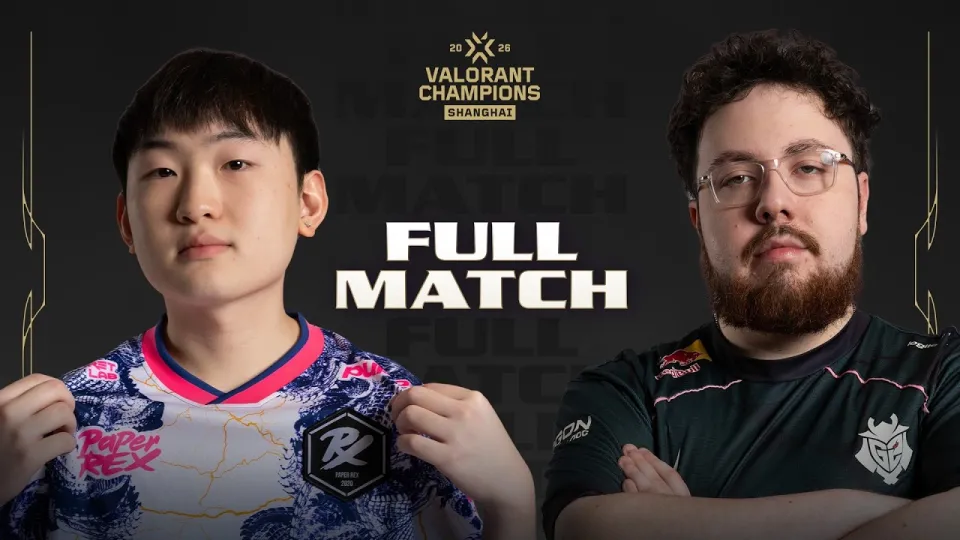
Video: PRX vs. G2 — FULL MATCH — VALORANT Champions Shanghai — Group Stage
Need articles like this for your video? They help promote it on YouTube and Google — order them in the Telegram bot @sat_sit_bot. The bot writes and publishes the articles itself (with your YouTube video embedded) on popular topical websites (no ads). Try it free: 50 articles on us.
· based on the channel VALORANT Champions Tour
Key takeaways
- PRX and G2 met in the group stage of VALORANT Champions Shanghai, with the full match streamed by the VALORANT Champions Tour channel.
- The series went the distance across three maps, and viewers singled out d4v41 as the carry on Haven.
- Trent's Split performance drew praise as close to a perfect individual map from the community.
- Invy's third-map surge was called out as the turning point that decided the series.
- Shanghai ran from September 24 to October 18, with sixteen teams from Americas, CN, EMEA and Pacific fighting for the world title.
PRX beat G2 in the VALORANT Champions Shanghai group stage by taking the series in a three-map thriller where d4v41 carried on Haven, Trent dominated Split and Invy swung the decider with a huge third-map performance. The match, streamed in full by the VALORANT Champions Tour, is the clearest example yet of why these two rosters keep producing the most watchable series of the year. For live updates, schedules and clips from the event, the official esports feed at VALORANT Esports on X is the fastest place to follow along.
What made PRX vs G2 at VALORANT Champions Shanghai so close
Every PRX vs G2 series in VALORANT has followed the same pattern: both teams refuse to give up map control, both coaches draft for comfort rather than surprise, and the result is usually decided by two or three individual rounds rather than a structural collapse. Shanghai was no exception. The group stage format at Champions rewards teams that can adapt mid-series, and both rosters came in with deep map pools, which meant neither side could win the veto alone.
The series also mattered for seeding. With sixteen teams from Americas, CN, EMEA and Pacific in the bracket, group stage results determine which side of the playoff draw a team lands on, and a loss to a direct rival can mean an immediate meeting with a tournament favorite. That context is why the match felt heavier than a normal group stage fixture, and why the crowd reaction in Shanghai carried through every clutch round.
d4v41 on Haven and the rounds that flipped the map
Haven was the map where PRX's structure held up best, and d4v41 was the reason. His positioning on the A-long and garage side forced G2 into slow, information-poor executes, and when G2 did commit, he was usually the first player to trade. Three things stood out in that map:
- Early aggression on the attacker side that let PRX bank a lead before G2 settled into their default setups.
- Consistent mid-round rotations that cut off G2's flank attempts instead of reacting to them.
- Retake discipline on the sites PRX lost, keeping the economy from snowballing against them.
Haven has always rewarded teams that treat the map as three separate lanes rather than one big puzzle, and PRX played it that way. G2's answer was to stack utility on the same chokepoints, which worked for a stretch but left them thin whenever PRX switched lanes late in the round.
Why Trent's Split performance looked like a perfect map
Split is the map where individual mechanics matter most, and Trent played it close to flawlessly. His duel win rate on the map was the kind of number that usually only shows up in highlight reels, and it came from good decisions rather than lucky timing. He took fights only after his team had already forced a rotation, which meant every kill converted into map space instead of a trade.
The other half of that story is G2's response. Split rewards teams that can retake the A site with stacked utility, and G2 did generate a few clean retakes. The problem was that Trent's pressure on B and mid kept pulling defenders out of position, so those retakes happened with fewer bodies than the situation required. By the time G2 adjusted, PRX had already banked enough rounds to control the pace of the map.
Invy's third map and the decider that settled the series
The third map is where the series turned, and Invy was the player who turned it. After a quiet start, he found openings on the entry side that PRX had been missing earlier in the series, and once those duels started going his way, G2's defensive setups stopped working. Viewers watching the full match flagged that stretch as the moment the momentum shifted for good.
There is a tactical reason for that swing. On a decider map, both teams usually run their most practiced composition, so the difference comes down to who wins the first two or three gunfights of each half. Invy won those fights, and PRX's economy never fell far enough behind for G2 to force a reset. Once a team is up two or three rounds on a decider with a working economy, the losing side has to take low-percentage fights, and that is exactly what happened.
The Odin question and other talking points from the match
One of the loudest talking points after the series was a G2 buy that included the Odin, a weapon that generates strong opinions in the VALORANT community. The logic behind it is straightforward: on maps with tight chokepoints and wallbangable geometry, the Odin can deny pushes and punish stacked executes without requiring perfect aim. The downside is that it is expensive, slow to rotate with, and nearly useless in open retakes.
Other recurring questions from the broadcast chat focused on production rather than gameplay. Viewers noticed an audio cut around the second half of the stream, and some asked why other teams' logos appeared on the arena screens during the event. Those are standard broadcast elements at Champions: the arena screens cycle through the full team list, and minor audio drops are usually local stream issues rather than something happening on stage. Neither affected the outcome of the series.
What this result means for the rest of VALORANT Champions Shanghai
A win like this gives PRX more than a better seeding position. It confirms that their map pool holds up against a top-tier opponent in a best-of-three, which matters enormously in a bracket where every series after groups is elimination. G2, meanwhile, leave the match with a clear set of fixes: tighter mid-round communication on Haven and a faster answer to entry pressure on the decider map.
For fans, the takeaway is simpler. PRX vs G2 has become one of the most reliable fixtures in professional VALORANT, and this Shanghai meeting added another chapter to that rivalry. Both teams still control their own path through the group stage, and with sixteen rosters from four regions in the event, the margin between advancing and going home is a single map.
Useful links
- Official X account: https://twitter.com/ValorantEsports
- Facebook: https://www.facebook.com/ValorantEsports/
- Instagram: https://www.instagram.com/VALORANTESPORTS/
- TikTok: https://www.tiktok.com/@valorantesports
- Twitch: https://www.twitch.tv/valorant
Final thoughts on PRX vs G2 at Champions Shanghai
PRX vs G2 delivered exactly what the group stage needed: a three-map series decided by individual brilliance rather than a one-sided draft. d4v41's Haven, Trent's Split and Invy's decider map each answered a different question about how PRX win games, and G2 showed enough on the retake side to suggest the rematch would be just as tight. The full match is available on the VALORANT Champions Tour channel, which produced the broadcast and remains the best source for complete VODs from the event. If you want live results, bracket updates and clips as the tournament continues, follow VALORANT Esports on X and keep an eye on the official schedule.
Source: PRX vs. G2 — FULL MATCH — VALORANT Champions Shanghai — Group Stage · Markdown version
Questions & answers
Who carried PRX against G2 on Haven?
d4v41 was the standout on Haven, holding down the A-long and garage side and forcing G2 into slow, information-poor executes. His early aggression let PRX bank a lead before G2 settled into their default setups, and his mid-round rotations repeatedly cut off flank attempts.
Why did G2 buy the Odin during the series?
The Odin is a situational buy that denies pushes through tight chokepoints and punishes stacked executes without requiring perfect aim. It is expensive and slow to rotate with, so it works best on defensive halves of maps with wallbangable geometry. In this series it generated debate but did not decide the outcome.
Was Trent's Split performance really that good?
Yes, by community consensus it was one of the cleanest individual maps of the series. Trent took fights only after his team had forced a rotation, so every kill converted into map space. That pressure on B and mid pulled G2 defenders out of position and made their retakes weaker than usual.
Did audio problems or arena screens affect the match?
No. Viewers noticed a brief audio drop in the second half of the stream and asked about other team logos appearing on the arena screens. The screens cycle through the full team list as standard broadcast filler, and the audio issue was a local stream problem, not something that changed the result on stage.